Priya runs finance at a Toronto software company. On Tuesday she has one payout run due: 42 contractors in the Philippines, a vendor invoice in the UAE, and a revenue-share payment to a partner in Brazil. One run. One approval in the accounting system. One line in the cash forecast.
By four in the afternoon she has five applications open.
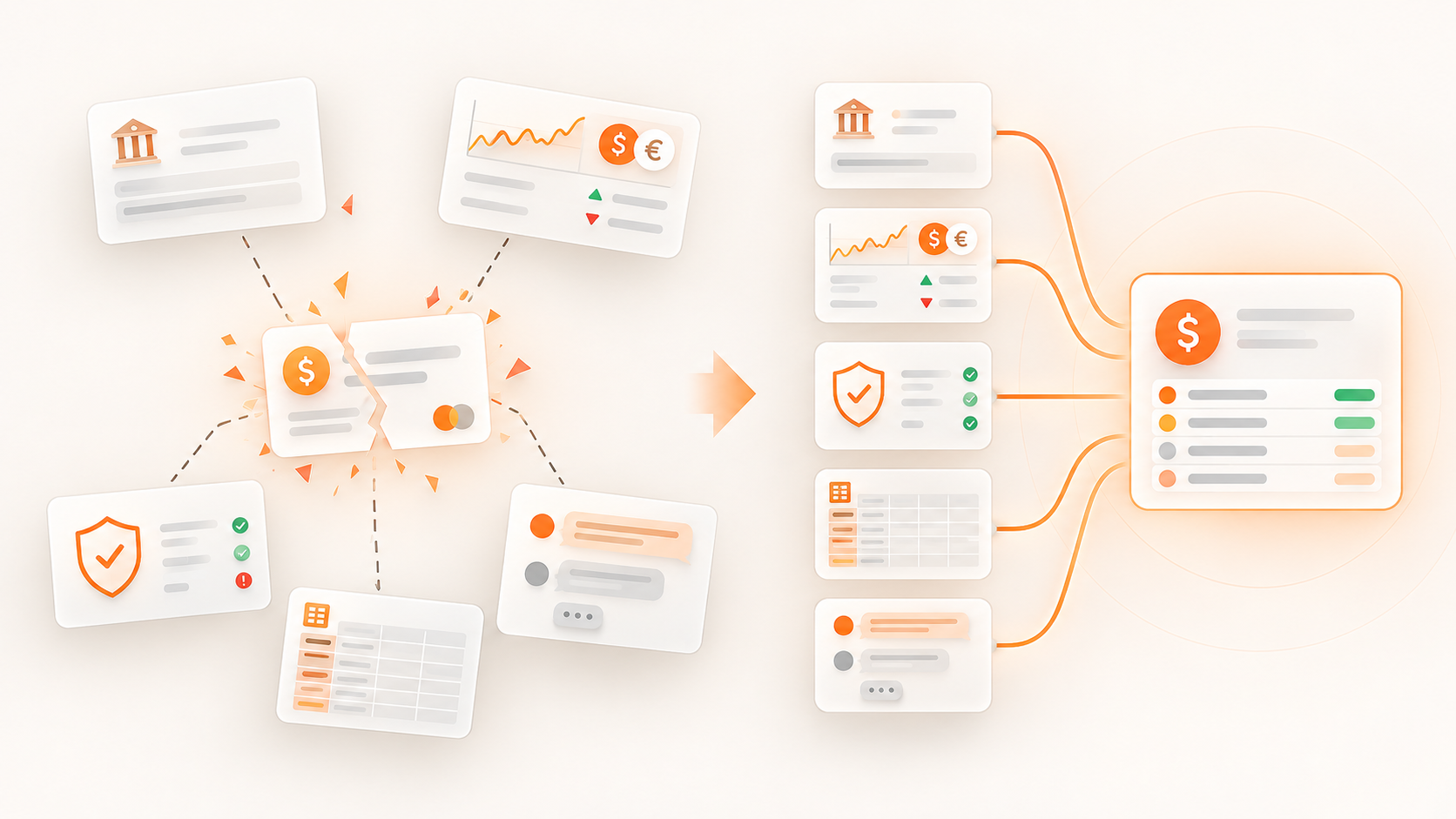
A single cross-border payout touches five systems: a banking portal to send, a foreign exchange provider to price, a screening tool to clear, a spreadsheet to reconcile, and a messaging thread to chase status. Each one holds a different fragment of the same transaction, and none of them holds the whole thing. That is what makes a cross-border payout workflow feel like five jobs instead of one.
The banking portal, to send
Priya starts here because this is where money leaves. She uploads the beneficiary file, fixes three rows the validator rejects for a malformed SWIFT field, and submits before the corridor cut-off. The portal confirms the instruction was accepted.
Accepted is not arrived. The portal knows what left the building. It has no view of what any intermediary bank does next, and no view of what lands. That gap is the first seam in the stack, and everything downstream exists to cover it.
The FX provider, to price
The rate Priya modelled at 10am was indicative. The dealt rate at 2pm is different. The rate that eventually appears on the confirmation is a third number, and it arrives in an email rather than in the payment record.
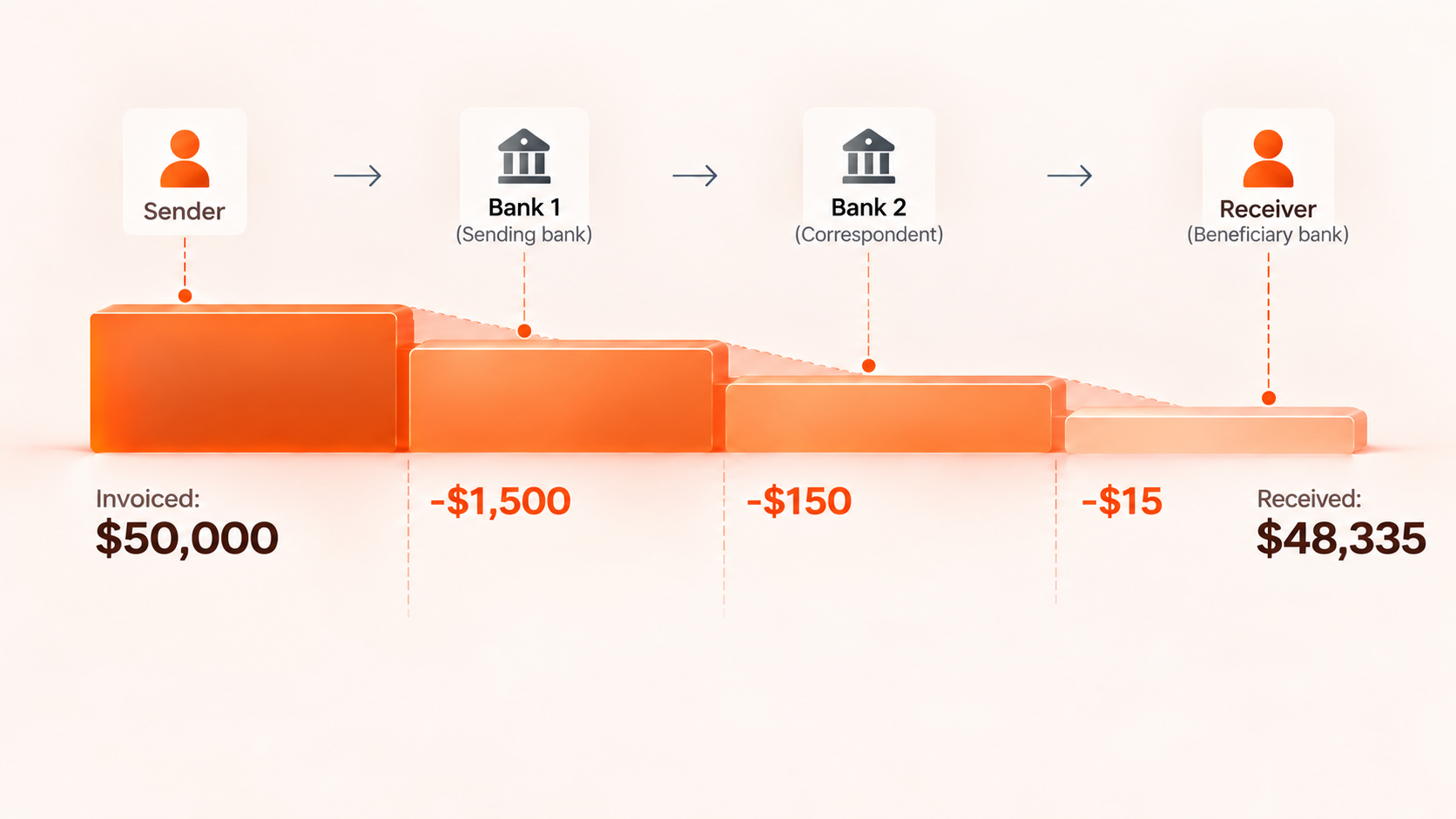
The split follows the pricing. The World Bank breaks the cost of sending money into two parts, the stated transfer fee and the FX margin, and reports a global average cost of 6.36% of principal, with banks the most expensive channel at roughly 15% Remittance Prices Worldwide. Two cost components, two systems, and no single place where cost per invoice can be read off. FX quoting for payouts sits outside the payout record by default.
KYB refresh on the Brazilian entity. Sanctions screening on the beneficiary list. Travel Rule screening for anything routed through a regulated digital-asset counterparty.
The seam here is quiet, and it matters most in an audit. Screening tools clear a counterparty. Payments move a transaction. Unless the clearance record carries the reference of the payment it authorised, the evidence and the money live in different systems, and working out which check cleared which transfer becomes a manual exercise months later.
The spreadsheet, to reconcile
Bank statement export, FX confirmations, invoice ledger. Three files, one workbook, VLOOKUP.
This is where the hours go. Cash reconciliation is the largest single time drain in the month-end close, running 20 to 50 hours a month and handled across three to five systems, with Excel in use at 94% of teams and named a major bottleneck by about half of them Ledge month-end close benchmarks. Buying a close platform does not solve payout reconciliation either: 86% of finance teams still reconcile in spreadsheets even with one installed R2R Efficiency Mirage 2026.
The messaging channel, to chase
Day three, a contractor in Manila reports nothing received. Priya emails the relationship manager, messages the local partner, and opens a thread with the people team who are now fielding the same question from eleven others.
The fifth tool exists because none of the first four can answer "where is it." And there is something to chase because a cross-border payment sits in queues rather than in transit: cut-off windows, correspondent legs processed in their own working hours, screening repeated at every institution in the chain, and holiday calendars in two countries that do not align. We covered that mechanism in detail in why international payments take days. Coordination by inbox is the industry norm rather than a local failure, with 93% of teams running close activity through checklists, spreadsheets and email R2R Efficiency Mirage 2026.
Why adding a corridor multiplies the stack instead of extending it
Adding a country does not add a row to a table. It adds another instance of all five tools.
A corridor is a bundle rather than a destination field: a bank relationship or licensed local partner, permission to move value into that market, an FX source that actually quotes that pair at size, a screening rulebook calibrated to that jurisdiction, and a last-mile payout rail. Change the country and every element of the bundle changes with it.
Compliance makes this concrete. Travel Rule thresholds diverge by regime rather than converging. Under EU Regulation 2023/1113, transfers of crypto-assets are subject to the same information requirements regardless of amount, so a small transfer between service providers carries full originator and beneficiary data Regulation (EU) 2023/1113, Article 14 and recital 30. The FATF baseline sits at USD or EUR 1,000. The US transmittal recordkeeping and travel rules apply at USD 3,000 or more 31 CFR 1010.410(e) and (f). The same EUR 800 payout is fully in scope in one corridor and below the threshold in another. There is no single rule to encode, which is why teams end up with a rulebook per corridor.
Price behaves the same way. World Bank monitoring of cross-border B2B costs in the Western Balkans shows EUR 5,000 transfers to the EU falling from 0.58% to 0.27% once SEPA-based pricing applied to the corridor WB6 B2B cost report, February 2026. Identical instruction, identical amount, different corridor infrastructure, and the cost halves. We ran the same arithmetic on the UAE, where traditional cross-border payments cost 3–5% all-in over three to five days against sub-1% same-day on stablecoin settlement, in our guide to cross-border payments from the UAE.
So the cross-border payment stack scales by multiplication. Three corridors at five tools each is fifteen touchpoints to maintain, three screening rulebooks to keep current, three FX conversations, and three reconciliation formats arriving in different file layouts on different days.
If this describes your close, the market data suggests you are unremarkable rather than disorganised.
A survey of nearly 300 CFOs and corporate treasurers across North America and Europe found the typical enterprise maintaining five to six bank relationships, more than 40 bank accounts, and roughly 12 payment providers, around six on the pay-in side and six on pay-out. Nearly half, 48%, named data-driven liquidity visibility and forecasting as their single biggest challenge Adyen and BCG next-generation treasury report. Fragmentation is still increasing at the systems layer: more than 20% of benchmarked companies run multiple ERP systems and 11% run more than one treasury management system NeuGroup Treasury Technology Benchmark 2026.
The consequence shows up in hours. Across 2,000 US CFOs, controllers and VPs of finance, 51% of the finance work week goes to manual tasks: reconciliation, exports, error-fixing, stitching reports together. Seventy percent say critical business data is scattered across systems, spreadsheets and dashboards with no single source of truth, and 57% have had visibility arrive too late to act on Intuit Future of Finance 2026.
The appetite for a different answer is already there. Seventy-four percent of those treasury leaders want integrated solutions covering the full cash lifecycle, and 88% of that group would consolidate to fewer providers Adyen and BCG. Demand for consolidation is settled. Supply is the open question.
What the juggle actually costs
Three cost lines, and only the first one gets discussed.
The labour line is visible: reconciliation hours, a close that takes six or more business days at roughly half of teams against only 18% closing in three or fewer Ledge, and the late nights that come with it.
The float line is larger and rarely attributed to tooling. When the arrival tail is unpredictable, teams send early and hold buffers in more accounts than the business needs. That is working capital immobilised by uncertainty rather than by a shortage of cash.
The risk line surfaces at the worst moment. Expectations for regulated digital-asset flows in 2026 include sanctions screening on every Travel Rule transmission and documented reasoning behind every decision to transmit, hold, escalate or reject, with an auditable trail FATF Travel Rule guide for 2026. A five-tool stack has nowhere to hold that record as a single artefact. The evidence exists, but it has to be reassembled from four systems and an inbox on the day someone asks.
Worth stating the bar before naming any product. A consolidated cross-border payout workflow earns its place only if it retires tools rather than sitting on top of them.
Five things have to be true. FX has to be quoted and fixed before authorisation rather than confirmed after, so cost per payout is known when the decision is made. Screening has to execute inside the payment flow so the clearance and the transaction share one record and one reference. Bulk payout processing has to produce single-ledger reconciliation, meaning one settlement record per run with per-beneficiary detail rather than three exports to be matched. Status has to be visible in the same place the payment was authorised, which is what removes the chase thread. And corridor coverage has to arrive as licensed capability, so adding a market is a configuration change rather than a six-month project to source a bank relationship.
That last point is usually the real objection at the CFO's desk, because consolidation sounds like a migration programme. In practice a corridor goes live once onboarding and KYB are complete, and the first production run typically follows in weeks rather than quarters, because the licensing and local partner work has already been done on the provider side.
Use the plain test. A layer that does not retire a tool is a sixth tool.
How zPayments collapses the stack
zPayments is built as that single layer, and it maps onto the five tools in the same order they opened.
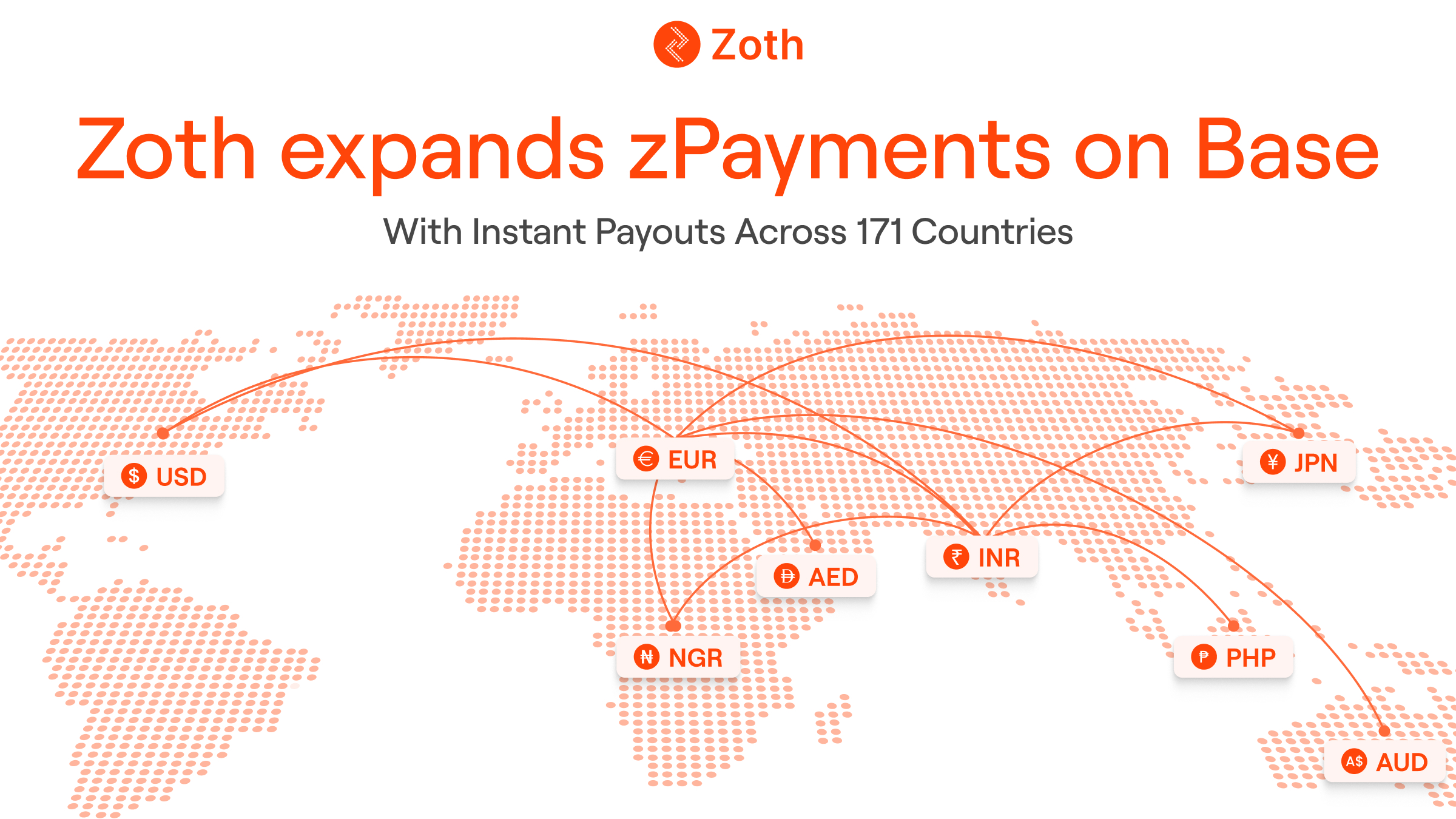
Send is one integration reaching multiple global payout routes, with automatic routing across 80+ bank and settlement partners selected on FX, fee and speed rather than on whichever relationship the treasury team happened to open first. Price is fixed FX quoted upfront with volume-based pricing and no platform fees, which is what makes cost predictable on recurring corridors instead of variable by run. Clear is automated KYB, Travel Rule screening and continuous monitoring executed inside the payment flow, on a FINTRAC-registered architecture (see our Canadian FINTRAC MSB registration), with a US-licensed counterparty path available through our Authorized Agent arrangement with Bakkt, covering money transmitter licensing, a New York BitLicense and FinCEN MSB registration. Record is real-time tracking and one settlement record per run, which is the difference between reconciling a payout and reconstructing one. Chase disappears, because status lives where the payment was authorised.
Underneath it, stablecoin payout infrastructure does the work the correspondent chain used to do badly. Value settles on-chain, conversion into local currency happens once at the destination through a regulated partner in that corridor, and screening runs at the point of payout rather than repeatedly at every institution in a chain. That is how the UAE corridor gets from 3–5% over three to five days to sub-1% same business day, and it runs at roughly $300M in annualised transaction volume today.
Replay Priya's Tuesday on that model. One authorisation covering all three corridors. One quoted rate she can defend in the forecast. One clearance record carrying the payment references. One settlement file that reconciles against the ledger without a workbook. Nobody in Manila asking where the money is, because the answer was on screen before the question was asked.
Five questions to run against your own stack
Ten minutes, five answers.
- Can you name the dealt FX rate on last month's largest payout without opening a second system? If not, cost per payout is an estimate rather than a number.
- Does your screening evidence carry the transaction reference of the payment it cleared? If not, your audit trail is a reconstruction job.
- How many exports does one payout run take to reconcile? More than one means the payout record does not exist yet; it gets assembled.
- Who gets pinged when a beneficiary says nothing arrived? If the answer is a person rather than a screen, you are paying for the fifth tool in headcount.
- What breaks first when you add a fourth corridor? Whatever you name is the part of the stack that never scaled.
A stack that fails three of these is over-assembled.
Where the cost actually accumulates
Each of those five tools was a reasonable purchase. The banking portal moves money, the FX desk prices it, the screening vendor clears it, the spreadsheet flexes to anything, and the messaging channel gets answers when nothing else can.
What nobody bought is ownership of the seams between them. The hours, the float and the audit exposure accumulate in the handoffs, where one payout becomes five partial records. A consolidated cross-border payout workflow fixes that by holding one record per payout: priced before it leaves, cleared inside the flow, and readable the moment it lands.
See what one payout layer looks like in your corridors. Book a zPayments walkthrough.