Stablecoins move money across borders in minutes. The payout into local currency is where businesses still lose days and 3–6% of every transfer, and it's the leg zPayments was built to run.
A payout has more moving parts than a normal transfer. Compliance, rate, settlement and corridor all sit after it, and compliance matters most, because it decides whether the other three happen on time.
Get those four right and a stablecoin balance becomes local currency on a clock your finance team can plan around.
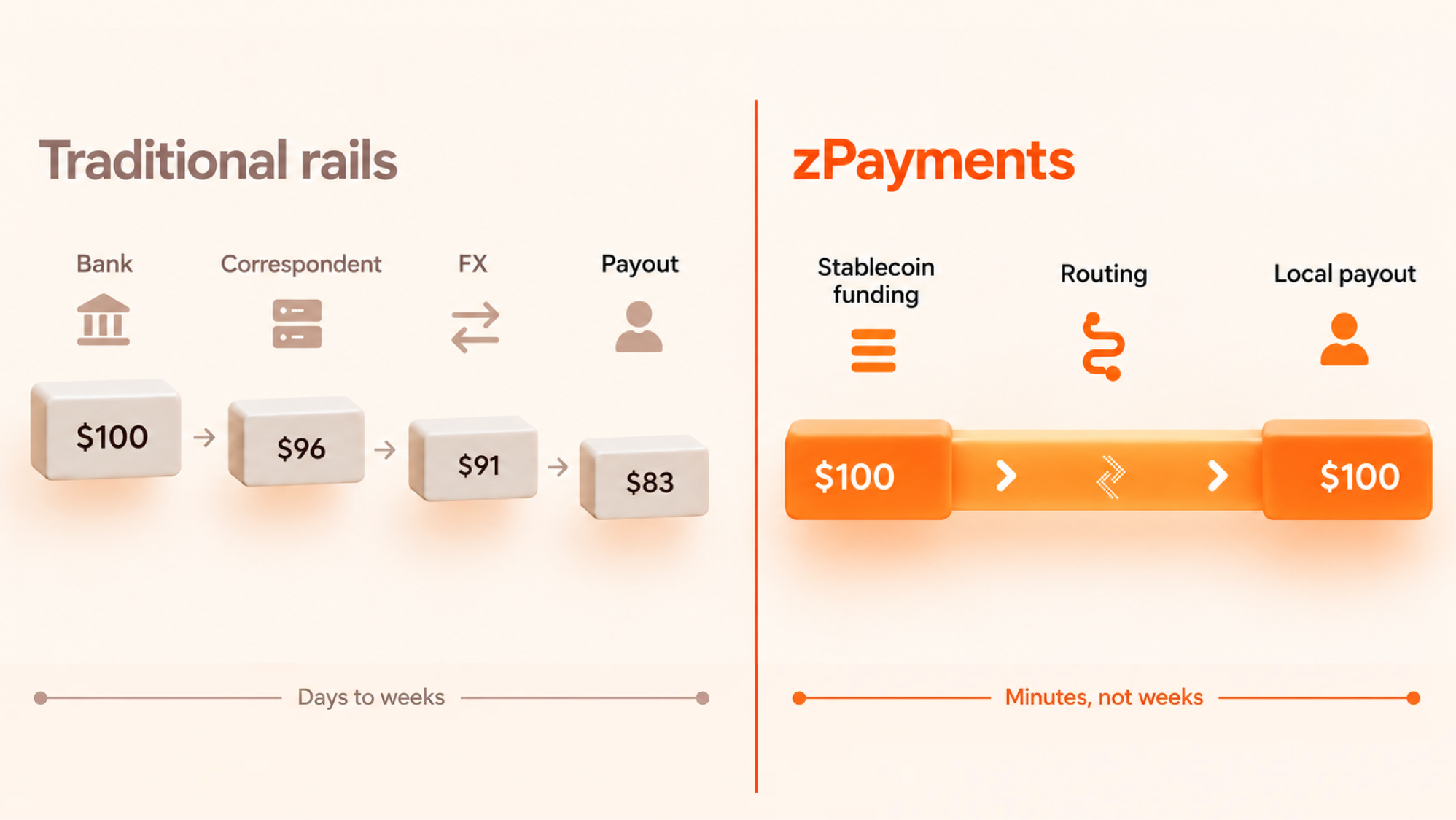
That last step is expensive. Traditional cross-border rails cost between 3% and 6% of the amount sent. For a business paying out $2M a month, that's $720,000 to $1.44M a year gone before a single beneficiary is paid.
zPayments matters because it takes over the leg where that money and time disappear. It runs four things for you: compliance, the rate, settlement and coverage.
Here's why each one matters, starting with where a payout actually loses its time.
The payout leg is where businesses lose time and money
The delay sits at the destination. Swift's network data shows 75% of cross-border payments reach the beneficiary bank within 10 minutes. The final domestic stage, which Swift calls the last mile, can take around 80% of total processing time.
Swift traces that delay to local regulatory reporting, operating hours, FX controls and manual processing at the receiving bank.
Stablecoins fix the middle of the journey. The Federal Reserve's August 2026 note on cross-border payments describes the model: convert into a dollar stablecoin, move it, then exchange it into national currency at the destination.
That final exchange still runs through local banks, local rules and local cutoffs. So for a business holding USDC, the question is who runs the destination side, and how much of it you see before you commit.
The payout leg is the problem worth solving, and zPayments starts where the delay starts: compliance.
Compliance runs inside every payout
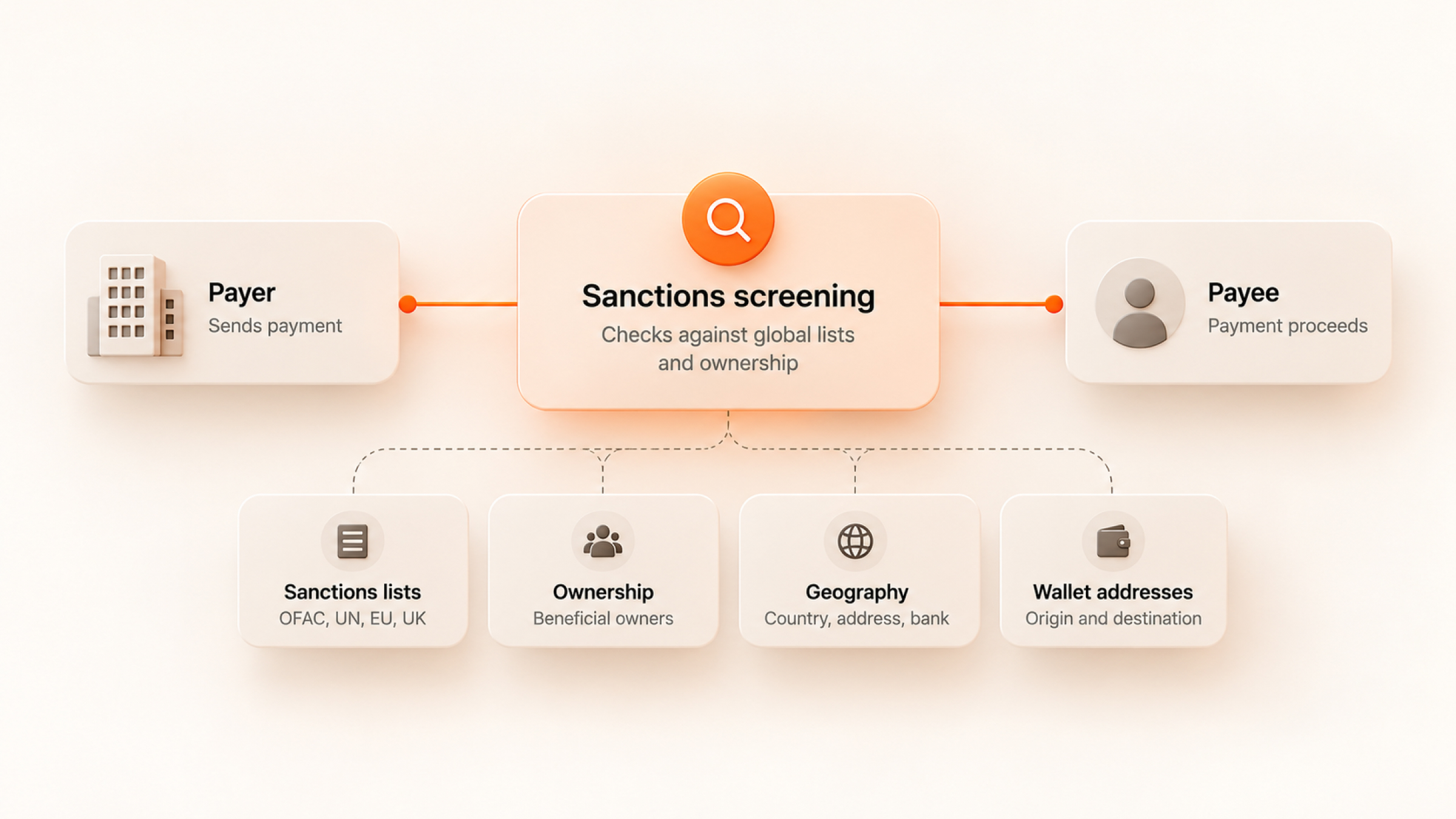
Compliance decides whether a payout moves at all. When it runs across several providers and banks, every handoff adds a check, a document request and a wait. zPayments runs it inside the payout flow instead.
Onboarding takes one KYB process. After that, every payout runs AML and CFT screening and Travel Rule checks on the platform. Ongoing monitoring and corridor documentation run there too, such as a FIRC for Indian export payments where it applies.
The rules are published. zPayments doesn't onboard clients from, or process payouts touching, DPRK, Iran, Myanmar or Russia. The same applies to any jurisdiction under comprehensive sanctions from Canada, OFAC, the UN, the EU or HM Treasury. Clients and payouts connected to the 22 jurisdictions on FATF's increased-monitoring list go through enhanced due diligence.
Zoth Payments Limited is registered with FINTRAC as a money services business, and payouts execute through licensed partners in each corridor.
That's the line to hold any provider to. Screening, Travel Rule handling and monitoring run inside the platform, and your business keeps its own regulatory obligations.
Once a payout clears compliance, the next thing a treasury team wants to know is what it will cost.
Up to 80% lower cost, with the price shown before you send
Most business payments still hide their price. In the Fed's reading of G20 progress data for North America, only around a quarter of B2B and B2P payment services disclose both their cost and their speed.
And the hidden price is large. At 3–6% per transfer, a business paying out $2M a month spends at least $720,000 a year just getting money to its beneficiaries.
Partners using zPayments save up to 80% of that cost compared with traditional rails. On $720,000, that's up to $576,000 back in the budget every year.
The price is visible before you commit, too. zPayments quotes every payout before it executes, showing one stated rate and the final landed amount, so your treasury team knows exactly what the beneficiary receives before any money moves.
The FX spread explainer breaks down how a markup hides inside a rate.
A known price only helps if the money arrives when you expect it, which brings us to settlement.
Payouts settle in minutes across supported corridors
Payments through correspondent banks typically take 48 hours or longer to credit. Swift's data puts around 80% of that processing time in the last mile. Whereas zPayments settles in minutes across supported corridors and three things make that possible.
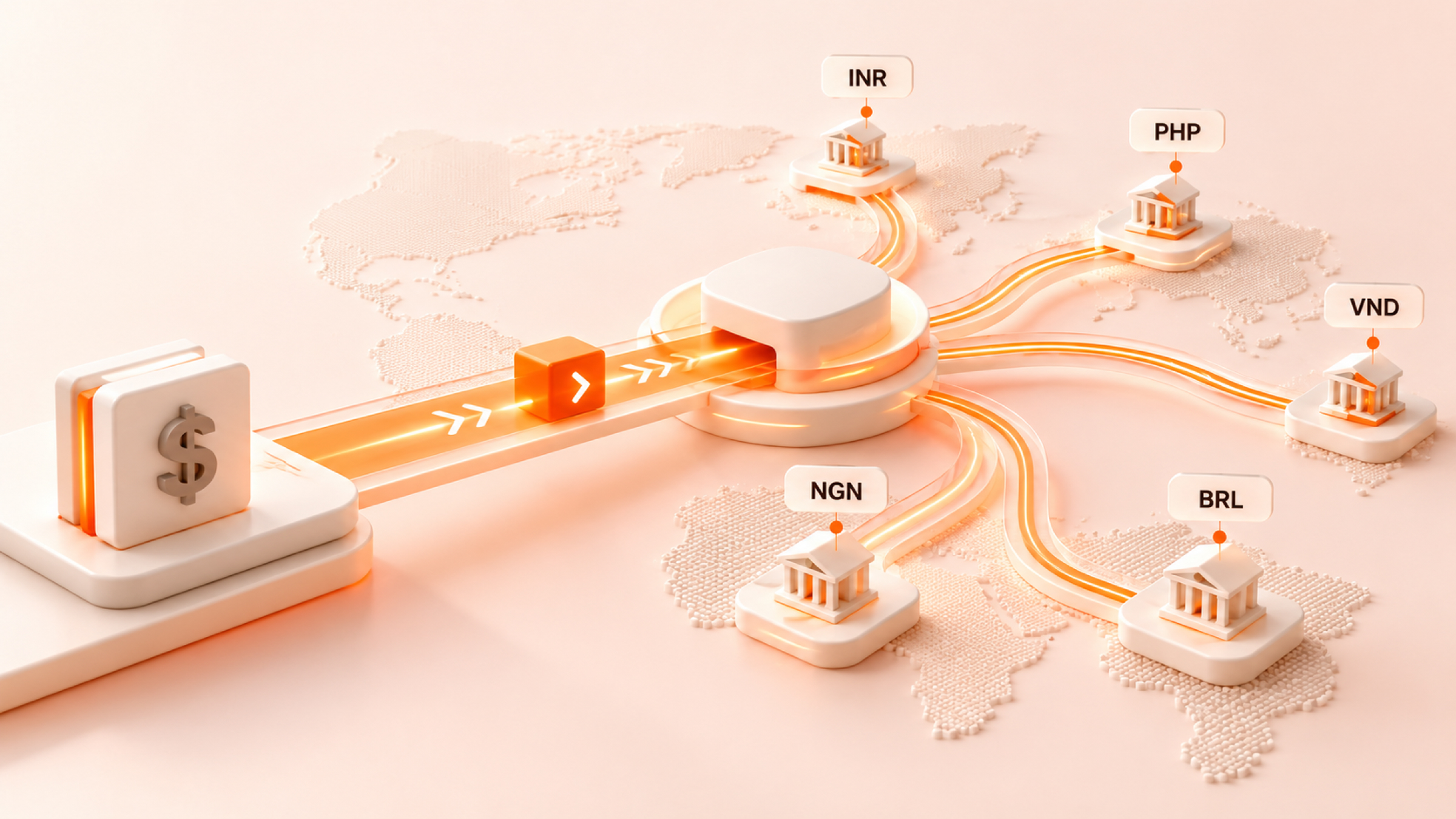
The dollar leg moves onchain as USDC, so no chain of correspondent banks relays it across borders. The payout itself is domestic: a licensed partner inside the corridor pays your beneficiary on the local rail from funds already in the country. And compliance and corridor paperwork clear on the platform before release, so the payout reaches that rail complete.
Where the local rail clears on a cycle, funds land the next business day, and the cutoff is stated before you send. You see status at every stage, and each payout, status update and compliance file sits in one auditable ledger.
Faster settlement also shrinks the work that comes after every payout. A services firm paying a team across four countries used to run three providers and reconcile each one by hand. On zPayments, the same payouts run as a single upload, reconciled to one auditable ledger.
None of that helps if your beneficiaries sit outside the network, so the last thing to check is where zPayments can pay out.
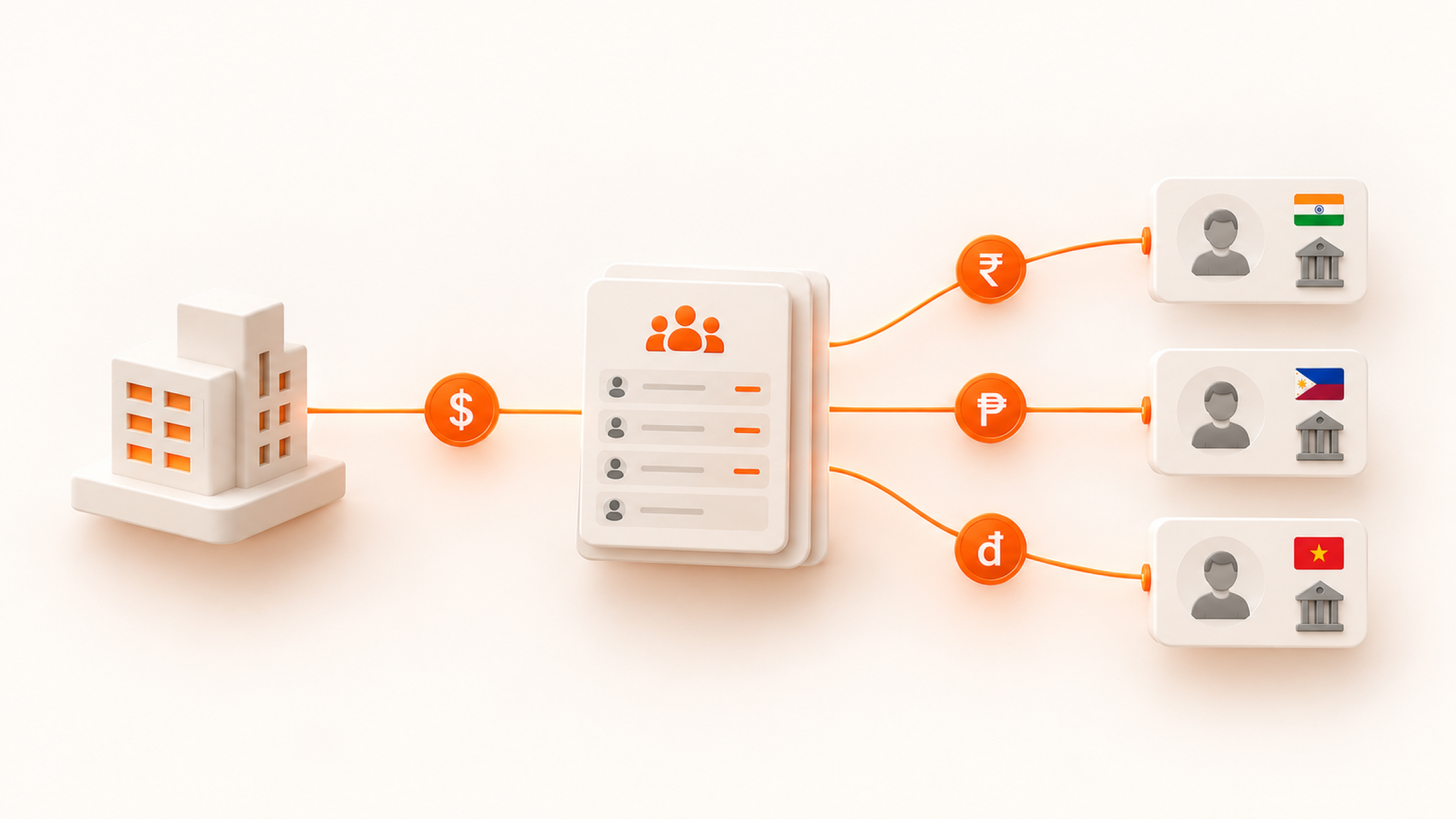
zPayments delivers stablecoin payouts to 171 countries. Bank payouts run in every market, and wallet payouts in a selected few.
Coverage grows one corridor at a time. Each new corridor goes live only after it meets the platform's standard, so a new market works the same way as the ones before it.
Put the four reasons together and the gap between a correspondent route and zPayments is easy to see side by side.
Traditional rails and zPayments, side by side
|
Correspondent banking route |
zPayments |
| Cost |
3–6% per transfer |
Up to 80% lower than traditional rails; no platform or usage fee |
| Price disclosure |
Around a quarter of North American B2B and B2P services disclose both cost and speed |
One stated rate and final landed amount before you confirm |
| Where the time goes |
The last mile can take around 80% of processing time |
Instant across supported corridors, next business day where the local rail clears on a cycle, cutoff stated up front |
| Compliance |
Checks at each institution, often with manual processing at the receiving bank |
One KYB, then AML, CFT, Travel Rule checks and monitoring on every payout |
| Tracking |
About 74% of payments tracked end to end on Swift |
Status at every stage, one auditable ledger |
How to move your payouts to zPayments
- Sign up and complete one KYB. Open an account on zPayments and verify your business once. Your funding wallet address is recorded during verification, and only that wallet can fund your account.
- Fund in USDC. Send USDC from your verified wallet. Your balance becomes available once the payout partner confirms receipt.
- Add your beneficiaries. Save each recipient's bank account, or their mobile wallet where the corridor supports it, and reuse the record on every payout.
- Get your quote. Enter the amount, source of funds and purpose. You see the rate with the FX fee included, the local network commission, and exactly what your beneficiary receives.
- Confirm and track. A zPayments operator reviews every payout before release, and the reviewer is never the person who created it. You follow the status through to delivery.
Run a payout through the zFX calculator
If your funds sit in USDC and your obligations sit in local currency, run the numbers below. Enter your payout, pick your corridor, and see the stated rate and what lands before you commit a dollar.