How to Choose an International Payments Provider for the Global South
Key highlights
- An international payments provider should be judged on the amount that lands in the recipient's account, not on the advertised fee.
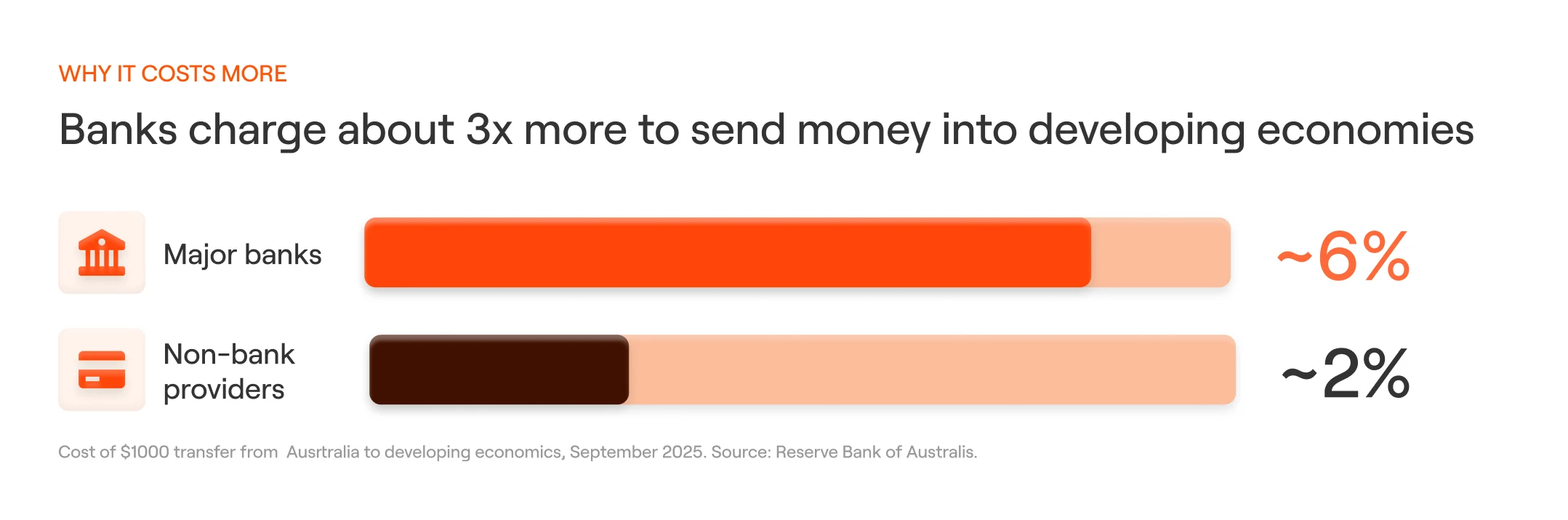
- Cross-border payments through banks into developing economies still cost about three times more than non-bank routes. The Reserve Bank of Australia measured major-bank transfers to developing countries at around 6%, against around 2% through non-bank providers.
- Coverage is not delivery. A country on a provider’s map does not mean a live local rail behind it.
- In the Global South, the deciding questions are local licensing, destination-side documentation and published success rates.
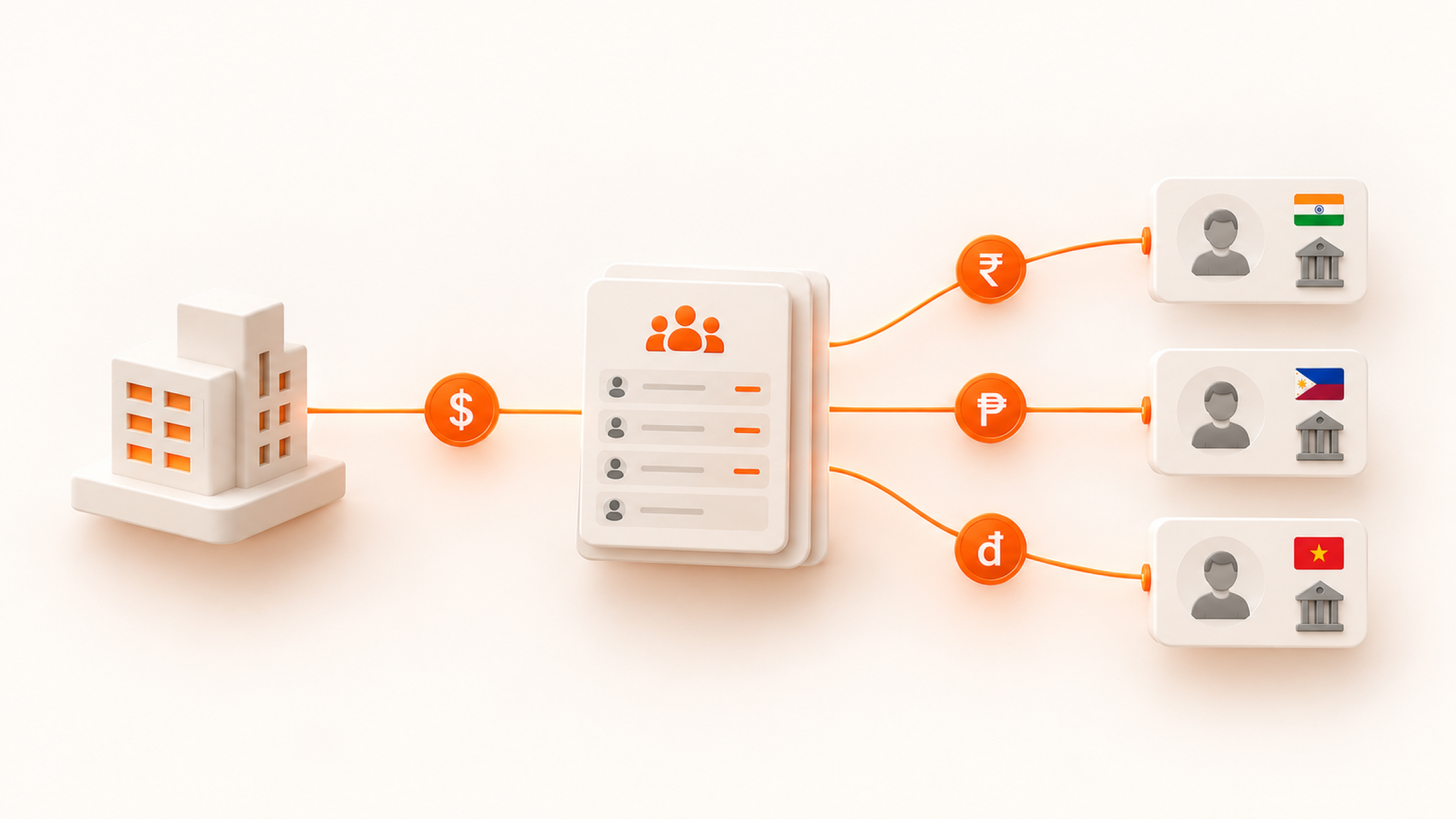
Finance teams making cross-border payments to contractors and suppliers in India, the Philippines, Nigeria, Brazil or Vietnam rarely lose money on the line item they can see. They lose it in the exchange rate, in correspondent deductions, in payouts that fail and return days later, and in documentation gaps that surface at audit. The right international payments provider closes those gaps.
Three definitions frame the decision.
An international payments provider is a regulated firm that moves money across borders on behalf of a business, converting currency and delivering funds into the recipient's local account. Banks, money transfer operators, payment platforms and stablecoin settlement platforms all fall into this category.
A Global South corridor is a payment route that ends in an emerging or developing economy, such as USD to INR or USD to PHP. These corridors carry thinner FX liquidity, local capital controls, and their own domestic payout rails.
All-in landed cost is the total difference between what the payer sends and what the recipient receives, measured against the mid-market rate. It folds the wire fee, the FX spread, intermediary deductions, and beneficiary bank charges into one number.
Why does the Global South change how a business chooses an international payments provider?
The World Bank's Remittance Prices Worldwide report put the global average cost of a $200 transfer at 6.36% in Q3 2025, with banks the most expensive channel at 14.99%. Business tickets are larger, but the pattern holds: the further a payment travels from the major currency pairs, the more each intermediary takes.
Speed follows the same curve. The G20 target is for 75% of cross-border payments to arrive within one hour. The RBA found that only about 34% of payments involving Australian institutions met that bar in 2023/24, and that lower-income regions continue to see worse outcomes.
A provider that performs well in Europe can therefore disappoint in Lagos or Manila. Every international payments provider has to be evaluated corridor by corridor.
Five criteria for evaluating an international payments provider
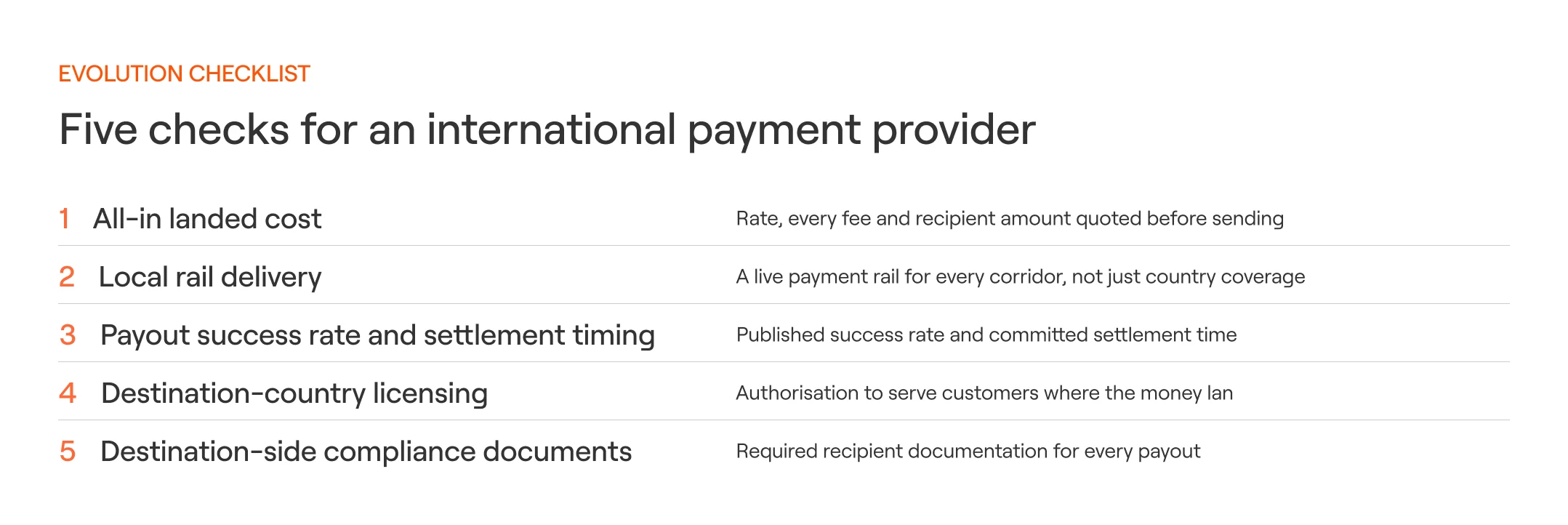
1. All-in landed cost, quoted before the payment is sent
The only fair comparison is the amount received from the same amount sent on the same day. A provider should quote the rate, every fee and the recipient amount before approval, and hold that quote through execution. An unexplained shortfall after that is usually an intermediary bank fee.
What a $10,000 cross-border payment to India actually costs using other rails.
| Cost component | Amount |
|---|---|
| Send amount | $10,000.00 |
| Sending bank wire fee | −$45.00 |
| Intermediary bank deduction | −$15.00 |
| Beneficiary bank charge | −$10.00 |
| Amount converted | $9,930.00 |
| Mid-market rate (assumed) | 88.00 |
| Rate quoted by the provider | 85.80, a 2.5% spread |
| FX cost against mid-market | −$248.25 |
| Amount landed | ₹851,994 |
| Value at mid-market | $9,681.75 |
| All-in landed cost | 3.18% |
2. Local rail delivery, not network coverage
A coverage map lists countries, not the rails that carry live payments. A provider can list a country without having a live rail into it. A buyer should ask which rail delivers each named corridor, and whether it settles into bank accounts, mobile wallets or both.
3. Payout success rate and settlement timing
Delivery reliability varies by rail. A buyer should ask for the provider’s published payout success rate. It should also ask what settlement timing the provider commits to: instant where the local rail runs in real time, or next business day where it clears in batches.
Price also moves between providers. A quote checked once at onboarding says little about the rate a business pays for the rest of the year.
4. Licensing: is the international payments provider authorised where the money lands?
Regulators increasingly look at where the customer sits, not where the provider is incorporated. The Bangko Sentral ng Pilipinas states in its operator registration FAQ that a provider operating outside the Philippines, even without a local office, must register if it serves customers there. A buyer should request the licence that covers each corridor.
5. Destination-side compliance documents
Every corridor lands on its own rail and leaves its own paper trail. An international payments provider has to deliver both, on every payout.
| Country | Local rail | Payout mode | Document the recipient needs |
|---|---|---|---|
| India | NEFT or RTGS | Bank account, INR | Bank advice of the inward remittance, tagged with an RBI purpose code |
| Philippines | InstaPay or PESONet | Bank account or e-wallet (GCash, Maya), PHP | Credit advice from the receiving bank. |
| Nigeria | NIP | Bank account, paid in naira | Naira credit advice. Goods exporters also complete Form NXP. |
| Brazil | PIX or TED | Bank account, BRL | FX operation record from a Banco Central-authorised institution |
| Vietnam | NAPAS 247 | Bank account, VND | Credit advice from a State Bank of Vietnam-licensed bank |
What each corridor means for the payer:
- India: The Foreign Exchange Management Act defines currency as notes, cheques, drafts and similar instruments, plus whatever the RBI notifies. No stablecoin is on that list, so a wallet receipt cannot close an export record.
- Philippines: InstaPay moves pesos between banks and e-money issuers in real time, 24x7, all year.
- Nigeria: The CBN Foreign Exchange Manual requires inbound transfers to be paid to beneficiaries in naira. A recipient expecting dollars receives naira at the converting bank’s rate.
- Brazil: Pix is built to credit funds within 10 seconds on 99 percent of transactions, at any hour, every day of the year. A provider still quoting next-day settlement into Brazil is routing around the local rail.
- Vietnam: NAPAS offers FastFund 247 only through its member banks and licensed organisations. Every payout depends on a licensed local partner, and a buyer should ask which one.
How a CFO and a Head of Payments should split the international payments provider evaluation?
| Criterion | What the CFO owns | What the Head of Payments owns |
|---|---|---|
| All-in landed cost | Annual cost across the payout book | Quote accuracy per corridor |
| Rail delivery | Fit with expansion markets | Rail, currency and cut-off per corridor |
| Success rate and settlement | Exposure to failed payouts | Settlement timing and cut-off rules |
| Licensing | Counterparty and regulatory risk | Licence per corridor |
| Documentation | Audit trail and tax position | Purpose codes and reconciliation |
The CFO signs off on the economics and the risk. A pilot of live payouts into the three highest-volume corridors settles more than any sales deck.
Questions to ask an international payments provider before signing
- What will the recipient receive on a $10,000 payment into each top corridor today, and how long is that quote held?
- Which local rail delivers each corridor?
- What is the published payout success rate, and what settlement timing applies?
- Which licences cover the payout?
- Which document does the recipient receive for tax and export purposes?
An international payments provider that answers in writing is one a finance team can measure.
How zPayments measures up as an international payments provider?
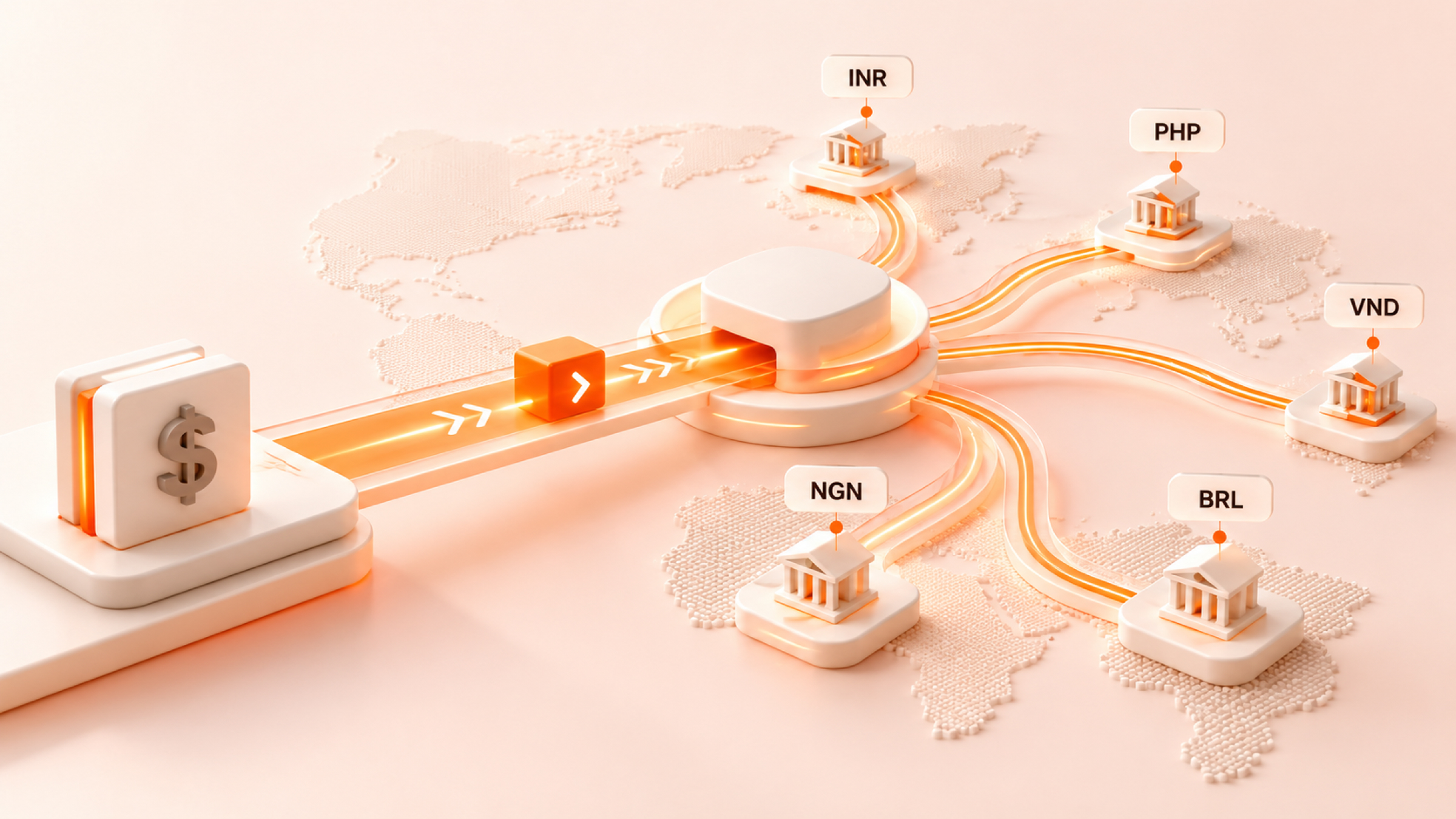
zPayments pays contractors, suppliers and partners in local currency from a stablecoin balance, across 171 countries. Funds convert once and settle onto local rails, so no correspondent chain sits between payer and recipient. Here is how it answers each criterion:
| Criterion | What zPayments does |
|---|---|
| 1. All-in landed cost | Every payout is quoted before it executes: one stated rate with the FX fee included, the local network commission, and exactly what the beneficiary receives. |
| 2. Local rail delivery | Payouts settle on local rails through licensed payout partners. India payouts route over NEFT or RTGS by amount. |
| 3. Payout success rate and settlement timing | 99.1% published payout success rate. Settlement is instant across supported corridors, and next business day where the local rail clears in batches, with the cutoff stated before sending. |
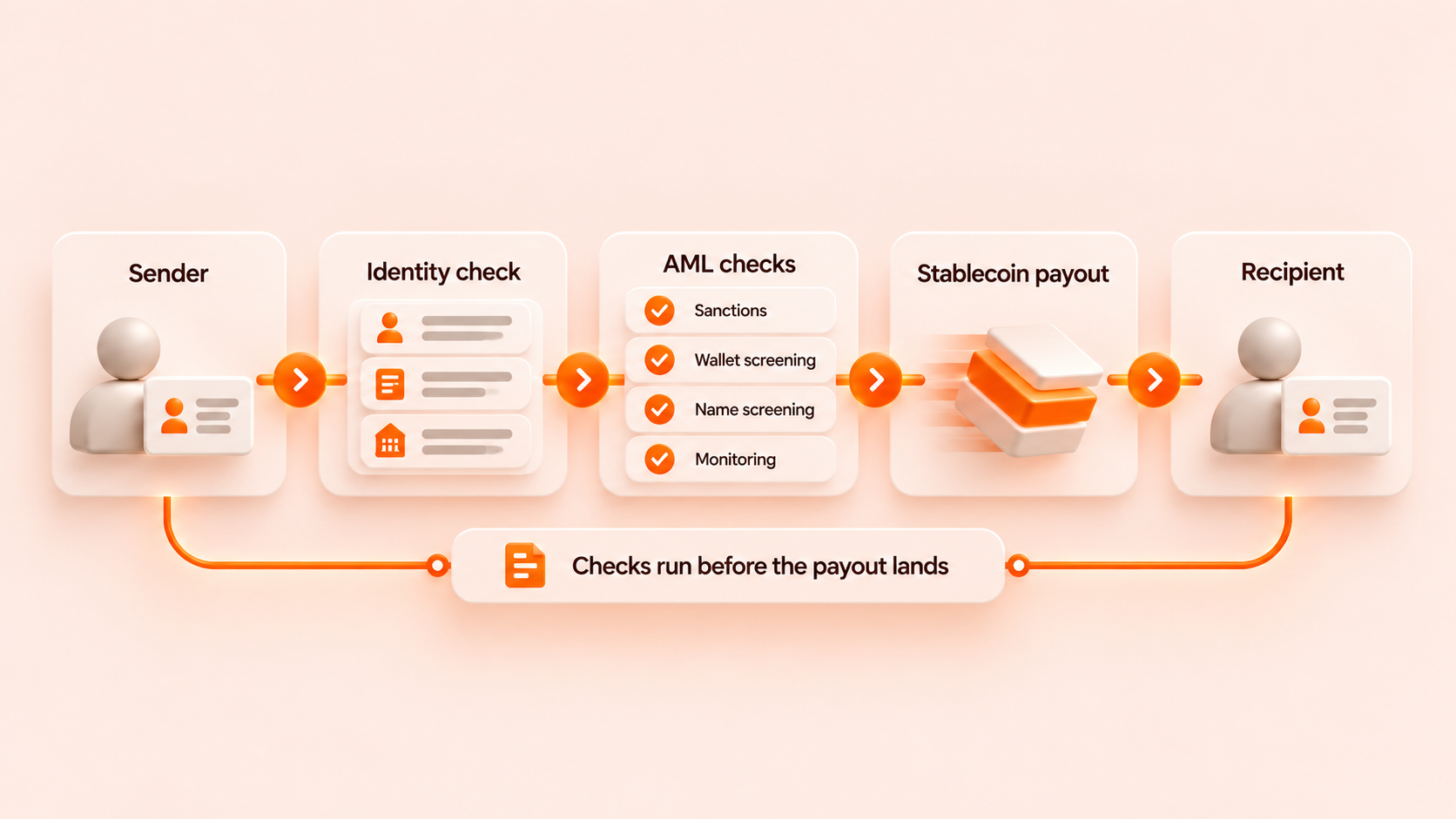
| 4. Licensing | Zoth Payments Limited is registered as a Money Services Business with FINTRAC. Payouts settle through licensed partners regulated in each corridor. Screening, Travel Rule checks and monitoring run inside the platform. |
| 5. Destination-side compliance documents | Payouts land in local currency through the destination’s banking system, so the recipient’s bank issues its standard credit record. Zoth screens every payment and keeps its Travel Rule record. |
Before shortlisting any international payments provider, finance teams can run their current corridors through zFX and bring the landed-cost figure to every vendor conversation. Simply compare the "Recipient Gets" figure with what their current provider delivered on the last payout.
Related: The true cost of one payout: bank wire vs fintech vs stablecoin rails