How to Choose an International Payments Provider for Importers
Key highlights
- An international payments provider for importers should be judged on the amount that lands in the supplier's account, not on the advertised transfer fee.
- Import invoices are often priced in a currency other than the buyer's own, so the importer carries the conversion cost. In Japan, 67.4% of imports were invoiced in US dollars and only 25.5% in yen in 2019, according to a Ministry of Finance research paper.
- On retail-sized transfers from Australia, major banks charged around 4% to advanced economies and around 6% to developing economies in September 2025, per the Reserve Bank of Australia.
- Six questions separate one provider from another: landed amount, rate certainty, local-currency delivery, in-transit deductions, regulatory standing and reconciliation records.
- A four-line ROI framework turns supplier payment costs into one annual figure a CFO can compare across providers.
Importers rarely lose money on the line item they can see. They lose it in the exchange rate, in deductions taken while a payment is in transit, and in the hours spent explaining to a supplier why an invoice arrived short. The right international payments provider for importers closes those gaps before the payment leaves.
Three definitions frame the choice of an international payments provider for importers.
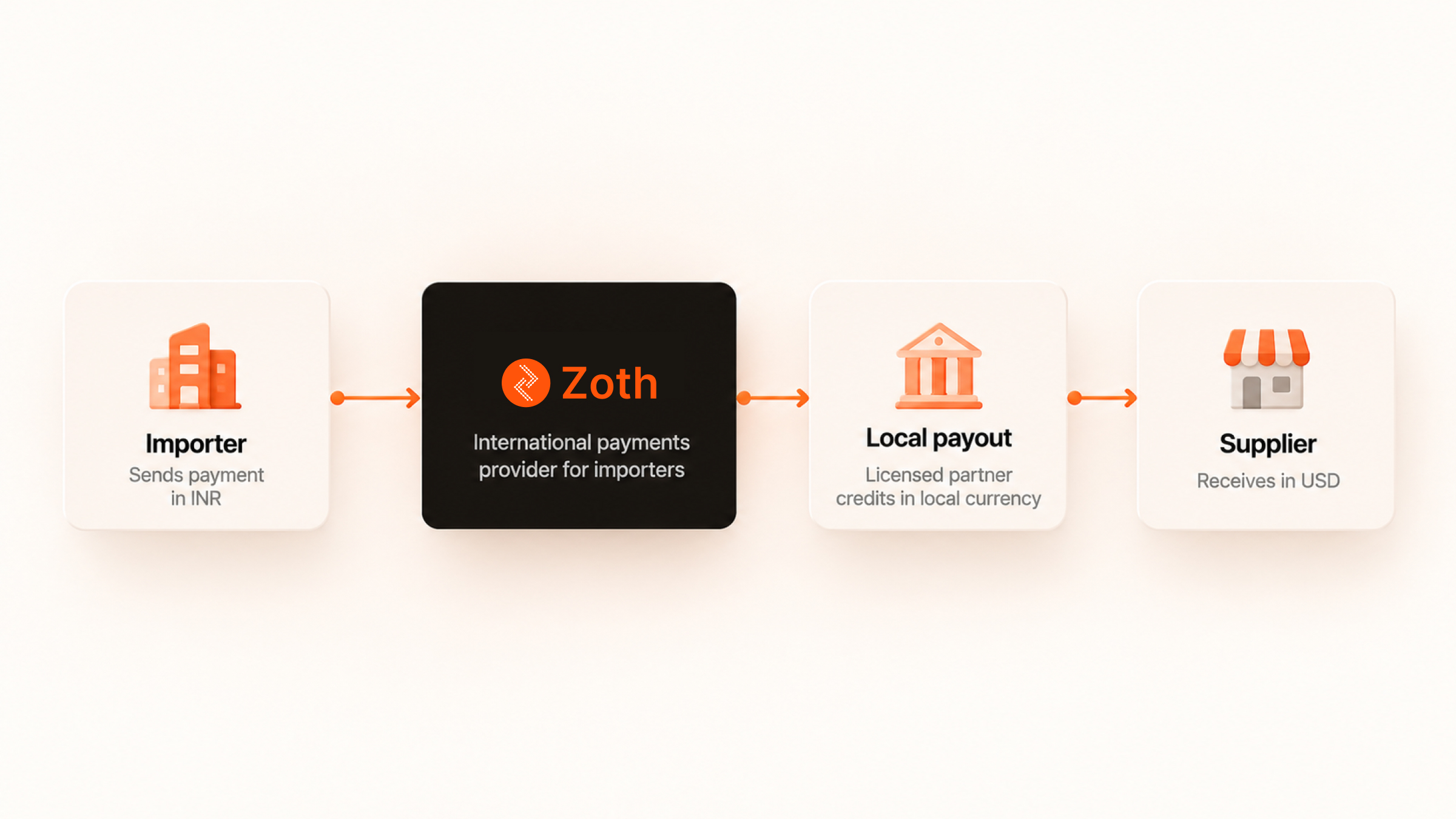
An international payments provider for importers is a regulated firm that moves a business's money to overseas suppliers, converts it into the supplier's currency and delivers it into the supplier's local account.
The landed amount is what the supplier actually receives after conversion and every deduction. It is the only figure that settles an invoice.
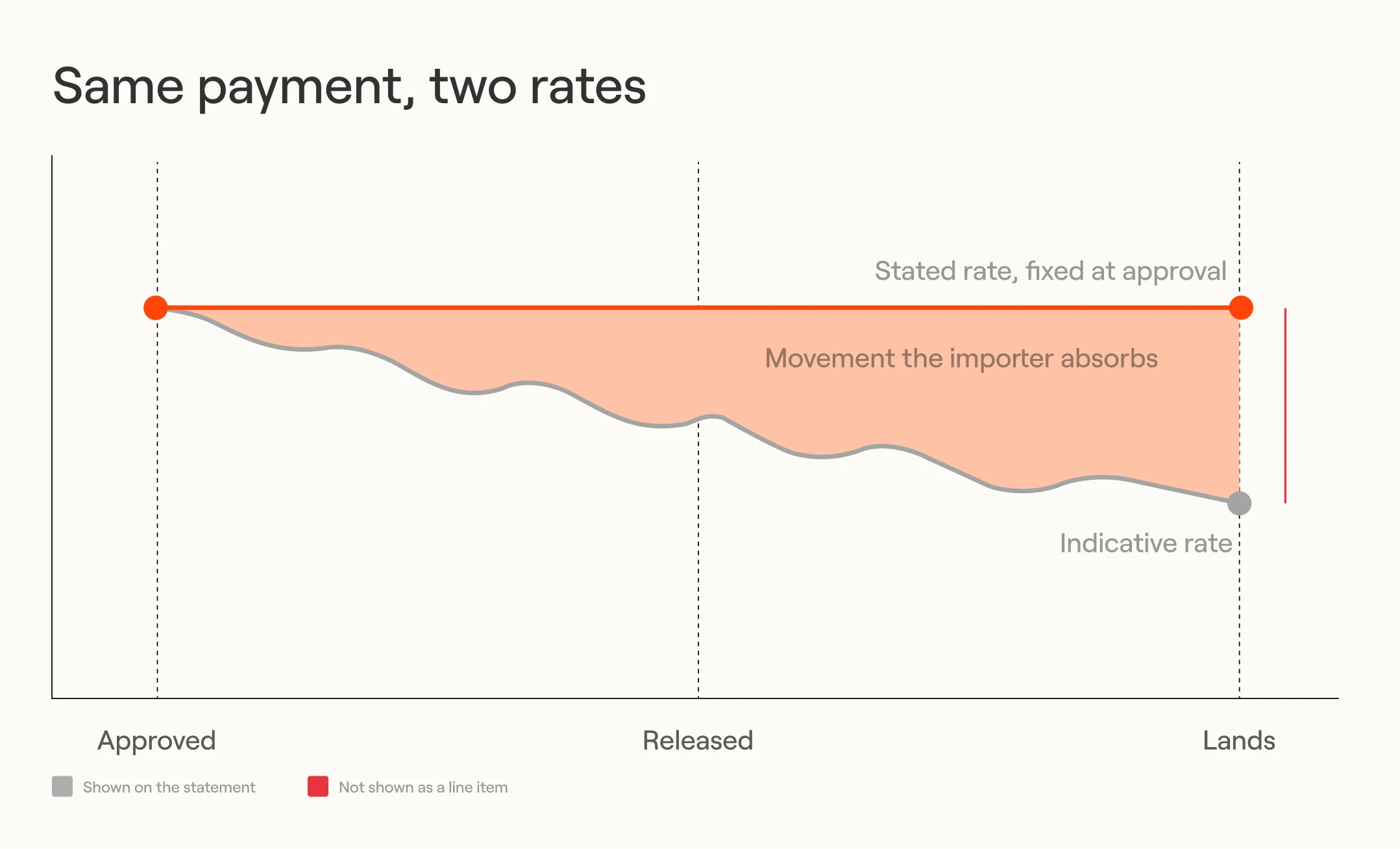
A stated rate is an exchange rate shown to the payer before the payment is released and applied unchanged when the payment lands. An indicative rate is not a stated rate.
Where importers lose money when they pay overseas suppliers
Three costs sit inside every decision to pay overseas suppliers.
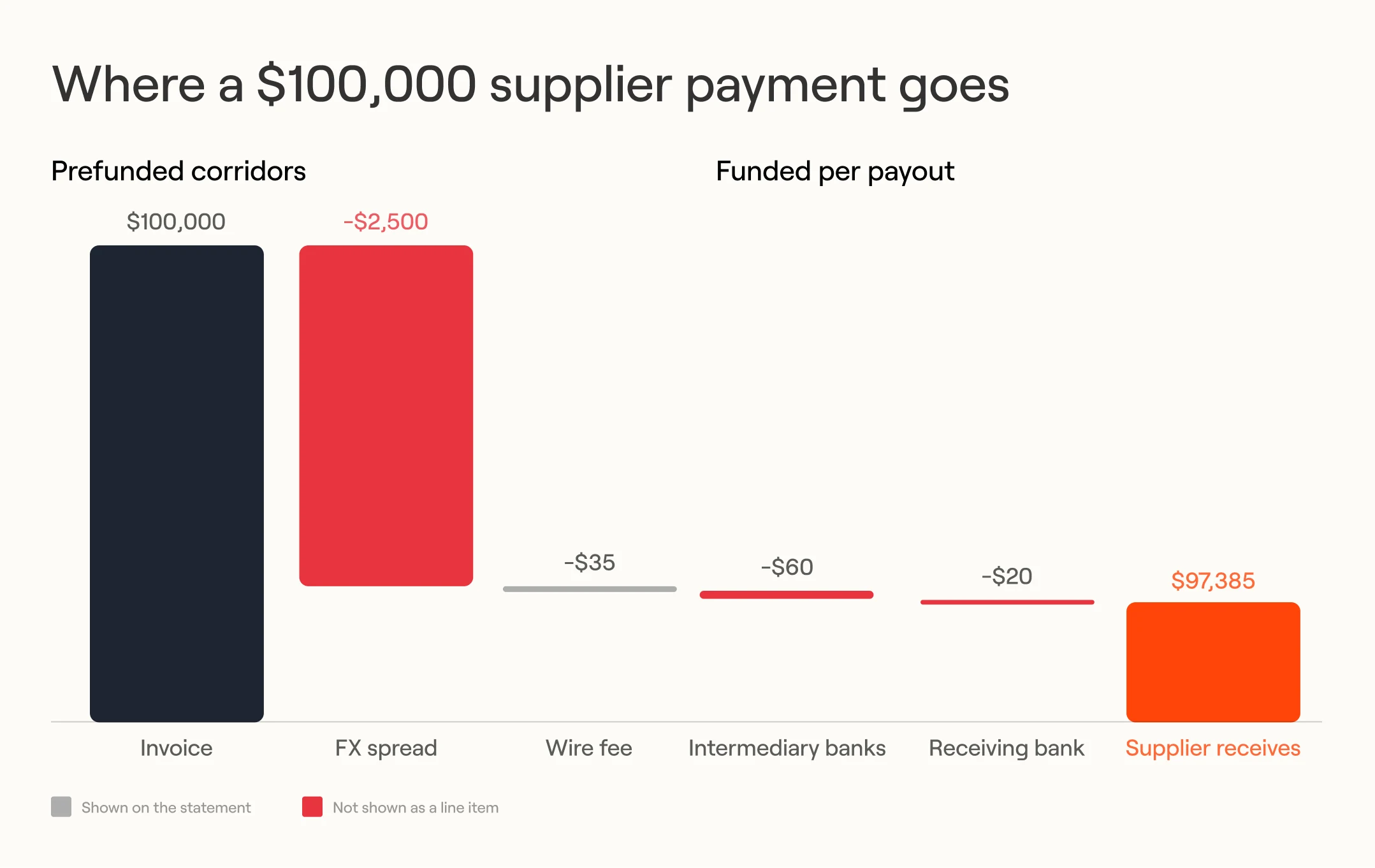
The conversion. When the supplier invoices in US dollars or its own currency, the importer pays the spread between the mid-market rate and the rate applied. The guide to what an FX spread costs shows how to calculate it from a business's own payment records.
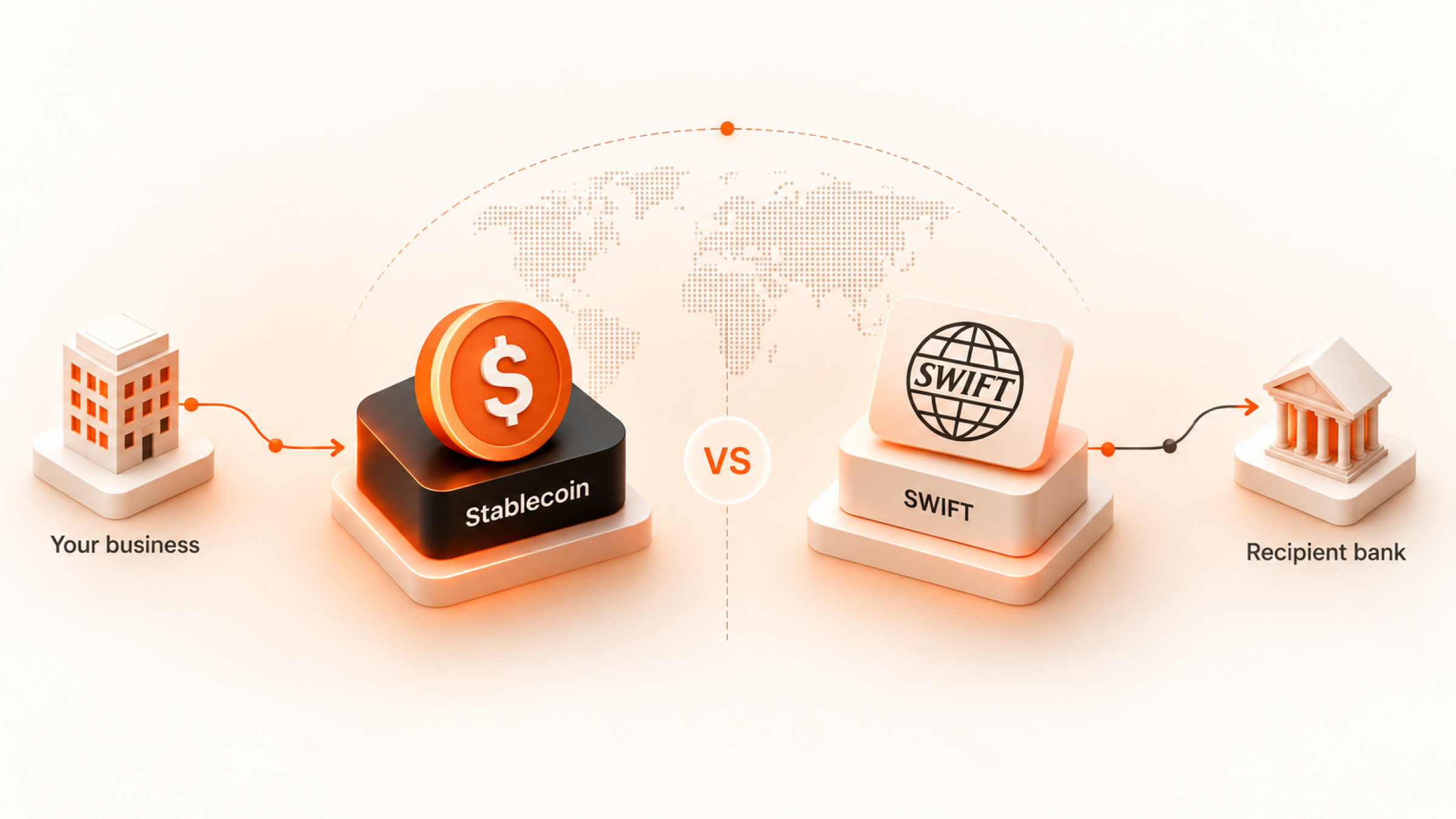
The route. A wire that passes through correspondent banks can lose a fee at each hop. The supplier receives less than the invoice, and neither side can see where the difference went. The mechanics are covered in the guide to intermediary bank fees.
The clock. The G20 target is for 75% of cross-border retail payments, a category that includes B2B, to reach the recipient within one hour by end-2027, according to the Financial Stability Board. The RBA estimates only about 34% of inbound Swift payments to Australia met that bar in 2023/24, and the FSB's 2025 progress report concedes the 2027 deadline is likely to be missed. A shipment that waits for cleared funds waits for the slowest leg.
Six questions to put to an international payments provider for importers
1. What lands in the supplier's account?
Ask for a quote on the amount received, net of every fee. The Australian Competition and Consumer Commission (ACCC) recommends exactly this presentation for money transfer quotes. Any business that needs to pay overseas suppliers can ask for the same.
2. Is the rate stated and held before release?
A rate that can move between approval and execution transfers the market risk to the importer. Ask how long a quote is held and what happens outside that window.
3. Does the provider pay in the supplier's local currency?
Delivery through the destination country's domestic payment system removes the correspondent hops where deductions occur. Ask any international payments provider for importers which local rail each corridor uses.
4. Who absorbs deductions in transit?
If the answer depends on which charge code (OUR, SHA or BEN) the payment carries, the importer is still exposed. An international payments provider for importers should be able to state that the invoice amount arrives in full.
5. Which regulator stands behind each leg?
Check an international payments provider for importers on the regulator's public register, not on the provider's own website. Ask which licensed partner delivers the final leg in each destination.
6. Does the record close the reconciliation?
Every payment record should carry the rate applied, the time it was applied and the amount received. Without the timestamp, the spread cannot be measured later.
An ROI framework for choosing an international payments provider for importers
The CFO owns the annual number. The Head of Treasury owns the rate, the timing and the counterparty. The framework below gives both a common figure.
Annual cost of supplier payments = (annual value of import payments × gap to mid-market) + (fixed fee × number of payments) + in-transit deductions + cost of reworking short-paid invoices
| Cost line | How to measure it | What to ask the provider |
|---|---|---|
| Gap to mid-market | Compare amount received ÷ amount sent with the mid-market rate at execution | Is the rate stated before release? |
| Fixed fees | Fee per payment × number of payments | What is the all-in cost per payment? |
| In-transit deductions | Invoice amount minus amount the supplier confirms | Does the full invoice amount arrive? |
| Rework | Staff hours on short-payment queries × hourly cost | What record does each payment produce? |
An illustrative case: an importer that needs to pay overseas suppliers $3,000,000 a year across 60 payments, at a 2.5% gap to mid-market and a $35 fee per payment, spends $75,000 on conversion and $2,100 on fees before any deduction or rework. Each international payments provider for importers on the shortlist can then be scored against the same four lines.
Few finance teams see the gap to mid-market, because no statement prints it. Measuring it takes two numbers from the same moment: the rate the bank quoted and the live market rate for the same amount.
zFX is Zoth's free FX calculator, built for that check. A finance team enters the amount to be sent and the currency pair, and zFX shows the live rate for that amount.
Put that rate next to the one the bank or provider quoted for the same supplier payment. The difference is the gap to mid-market on that payment, measured before the money leaves rather than reconstructed at month end. It is the first line of the ROI framework above, and the one a CFO usually cannot fill in.
Zoth Payments Limited as an international payments provider for importers
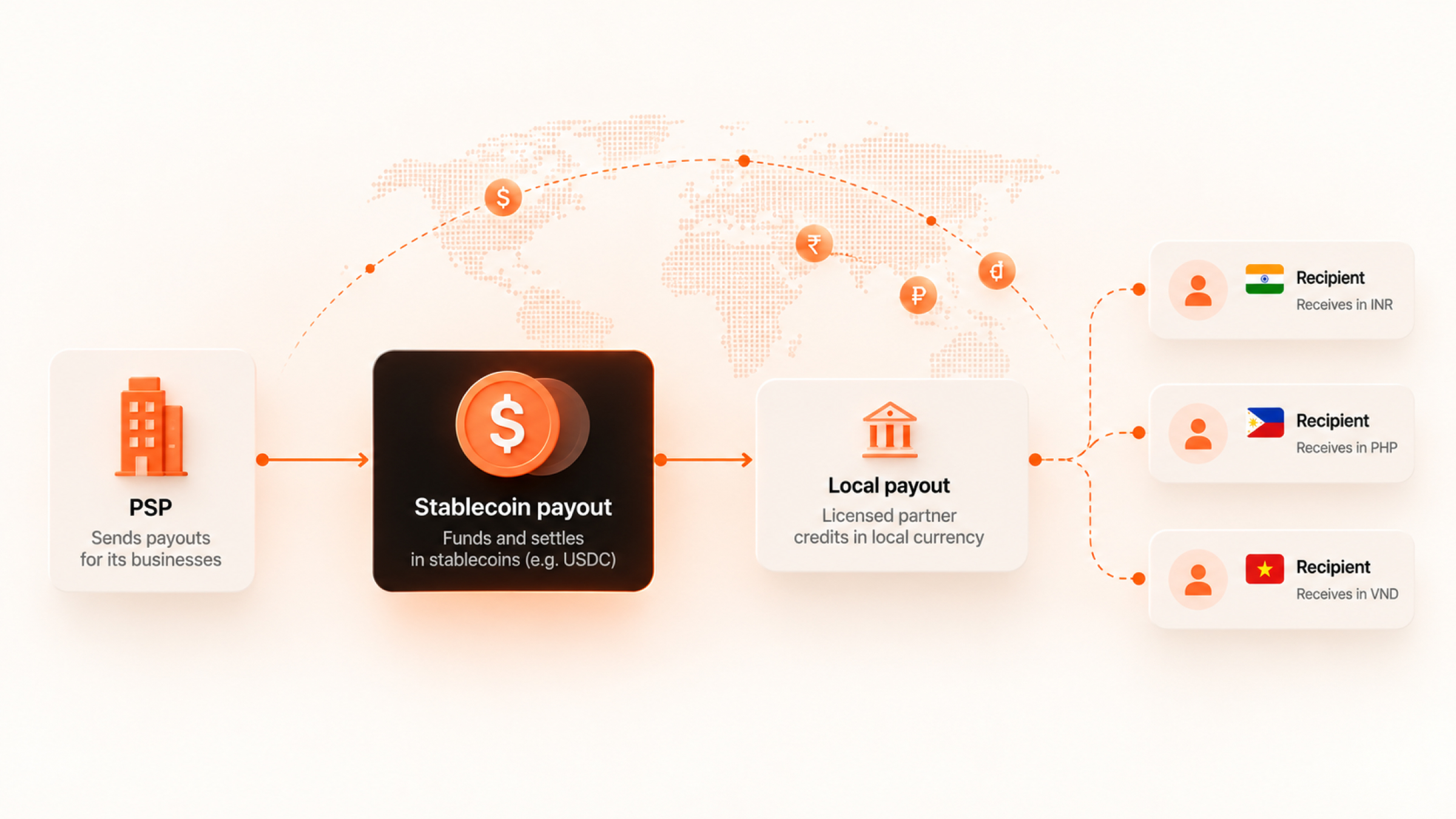
zPayments pays suppliers, vendors and contractors in local currency from a stablecoin balance across 171 countries. Country availability, currencies, settlement methods and timelines may vary by jurisdiction and regulatory requirements. Eligible payments receive a stated rate before the payment is sent, subject to applicable corridor, compliance and partner requirements, and that rate does not change when the payment lands.
Payouts go into the supplier's local payment system, with no correspondent bank in between. Zoth Payments Limited is registered with FINTRAC as a money services business (FINTRAC MSB registry), and payouts settle through licensed partners regulated in each corridor.
The same six questions apply to every provider on the shortlist.
For importers buying from India, the Philippines, Nigeria, Brazil or Vietnam, corridor-level detail is in how to choose an international payments provider for the Global South.
Pay overseas suppliers at one stated rate
Running payouts in emerging markets? Audit your cross-border payout fees with an International Payment Specialist at Zoth today.
Frequently asked questions
What is an international payments provider for importers?
A regulated firm that converts a business's money into its supplier's currency and delivers it to the supplier's local account.
How should a business pay overseas suppliers?
Through a provider that quotes the landed amount, states its rate before release and delivers into the supplier's local payment system.
Why does a supplier receive less than the invoice?
Usually because correspondent banks deducted fees in transit, or because the rate moved between approval and execution.
How does a CFO compare one international payments provider for importers with another?
Send the same amount on the same day through each and compare what the supplier received. The ROI framework above turns that into an annual figure.
What records should an importer keep for each supplier payment?
The rate applied, the time it was applied, the amount sent and the amount the supplier confirmed.